Bumblebees and play

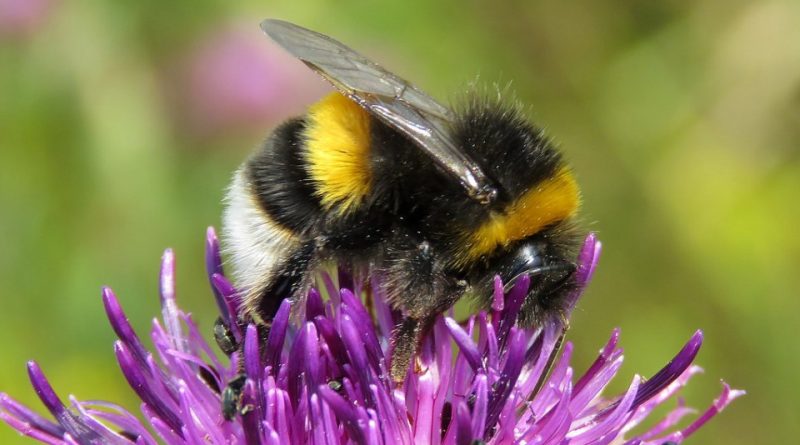
Photo of Bombus terrestris from https://antropocene.it/en/. Do animals play, at least within the context of how we define the word? That’s a question I often ponder or, more specifically, I ask myself, “Is the behavior I’m witnessing when I observe a creature a behavior other than utilitarian?” I am not a biologist (but I did sleep at Holiday Inn last night). That’s a joke probably only those who watch American television will get.
Anyway, there are an increasing number of articles appearing in popular media that suggest myriad creatures exhibit play. I ran across this article from Nature the other day about bumblebees, specifically the species Bombus terrestris.
Two specific aspects of this article caught my attention. One was a reference to the scholarly work of Gary Burghardt out of the University of Tennessee, who has outlined the five criteria for defining play in animals. I actually have cited Burghardt previously in The Bio Stage’s sister blog, The Cichlid Stage. The second aspect of this article that stood out was that it failed to adequately convince me that the observed behavior exhausted all other possibilities for behavior motivation other than play. Granted, I have not read the research from which the article originated, which may have sufficiently addressed this.
Nonetheless, the concept of play in animals, as anthropomorphic as it may be, is intriguing because it at minimum suggests a level of cognition not normally applied to most animals, much less bees. Communicating and translating behavioral motivations and labeling such behavior is critical to fully educating the human population about the creatures we share this planet with.