Bears, wolves, oh my!

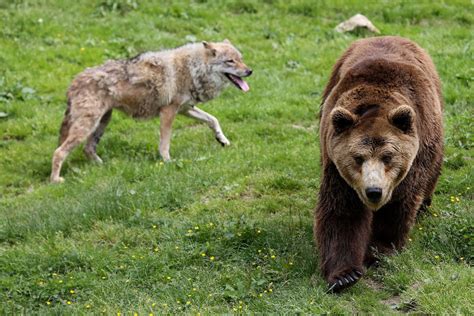
Photo of a wolf and bear in Yellowstone National Park. Photo from https://4.bp.blogspot.com/. This post isn’t really about bears or wolves per se, though they are the genesis for the post. Specifically, conservation efforts surrounding grizzly bears and wolves in Montana are what precipitated this piece.
On animal welfare
I have read some positive reviews about the octopus documentary on Netflix titled “My Octopus Teacher.” Though I haven’t watched it yet, I am familiar with some of the topics raised in the documentary. One of these, perhaps not discussed explicitly, is animal welfare. If animal welfare is near and dear to you and if you haven’t already, I would encourage you to read the recent book by professor and scholar Ernest Freeberg, A Traitor to His Species. If the name Henry Bergh doesn’t ring a bell, perhaps you’re familiar with the American Society for the Prevention of Cruelty to Animals, more commonly referred to by its acronym, ASPCA. Bergh was the founder. Destructive discourses
Word cloud image from http://exegeticaltools.com/. How many times have you heard or read phrases such as “ugly bitch,” “sick as a dog,” or “monkeying around”? Like most native English speakers, you’ve probably encountered those phrases often. According to Arran Stibbe, an ecological linguist, these are linguistic mechanisms that express negativity toward animals. I bet you’ve never thought of such phrases in that manner. In other words, the very words we use in communication, even when no ill intent is meant, become part of our lexicon and can have unintended negative effects.